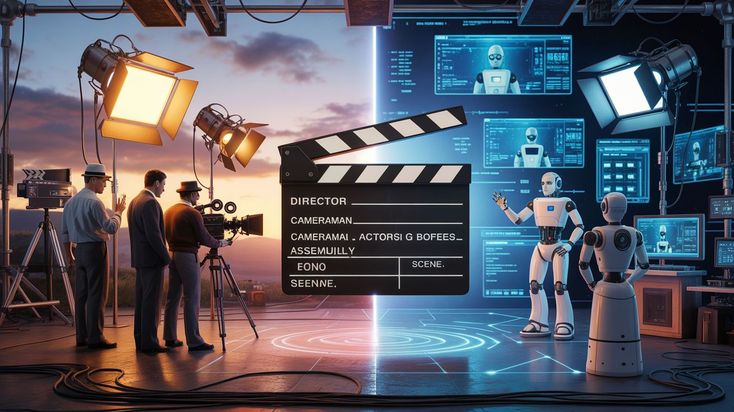
Independent media has undergone a major transformation over the last two decades. What once existed primarily on the margins of the entertainment industry has evolved into a significant force influencing global culture, artistic experimentation, and digital communication. Independent creators are no longer simply alternatives to mainstream systems; many are now shaping the direction of storytelling itself.

This shift has been driven by several factors. Technological advancement has dramatically reduced production barriers, allowing smaller teams to create work with professional-level quality. Digital distribution has expanded audience reach beyond geographic limitations, making it possible for projects developed outside traditional studio systems to gain international visibility. At the same time, audiences have become more receptive to unconventional formats, niche perspectives, and stories that reflect experiences often ignored within commercial media cycles.
Yet increased accessibility has also created new pressures.
The sheer volume of content being released daily has intensified competition for visibility. Algorithms increasingly determine discoverability, and creators are often pushed toward producing work optimized for engagement rather than depth. In this environment, independent media faces a difficult balancing act: remaining visible within fast-moving digital ecosystems while preserving creative integrity and intentional storytelling.
Many creators now operate within systems that reward speed over refinement. Short production cycles, constant platform updates, and audience retention metrics can influence not only distribution strategies but also the creative process itself. Projects that require patience, complexity, or unconventional structure often struggle within environments designed for rapid consumption.
As a result, sustainable creative infrastructure has become one of the most important issues facing independent production today.
The conversation is no longer limited to funding alone. Long-term success increasingly depends on operational support, strategic development, collaborative networks, and distribution systems capable of adapting to changing technologies. Independent creators require environments where experimentation is possible without sacrificing stability or continuity.

This is where multimedia collectives and collaborative production ecosystems continue to gain importance. Unlike isolated project-based models, collective structures create ongoing frameworks for development, resource sharing, and creative coordination across multiple disciplines. They allow filmmakers, musicians, animators, and digital artists to work within interconnected systems that strengthen both artistic output and long-term sustainability.
Cross-disciplinary collaboration has become especially important as media boundaries continue to dissolve. A single project may now combine cinematic storytelling, original scoring, animation, interactive design, and digital world-building within one unified experience. Creative work is becoming increasingly fluid, requiring production models capable of supporting multiple formats simultaneously.
The rise of immersive and emerging technologies has accelerated this evolution even further. Virtual production environments, spatial audio, interactive media systems, and AI-assisted creative tools are redefining how stories are developed and experienced. These innovations create opportunities for entirely new forms of expression, but they also challenge creators to think critically about authenticity, originality, and artistic responsibility.
Technology alone does not create meaningful work. Tools can expand possibilities, but they cannot replace perspective, emotional intelligence, or cultural understanding. Audiences continue to respond most strongly to stories that feel grounded in human experience rather than manufactured for algorithmic performance. This is one reason independent media continues to maintain cultural significance despite constant shifts within the industry.
Another defining aspect of independent production is its ability to preserve diverse perspectives. Large-scale commercial systems often prioritize projects with broad market predictability, which can limit narrative diversity and reduce space for experimentation. Independent creators, by contrast, frequently engage with subjects that are socially complex, regionally specific, politically sensitive, or structurally unconventional.
These projects contribute to cultural dialogue in ways that extend beyond entertainment. They document experiences, challenge assumptions, and create records of social and artistic thought during particular moments in history. Independent media often becomes an archive of perspectives that may otherwise remain underrepresented within dominant cultural narratives.
The future of storytelling will likely depend on how effectively creators can combine innovation with substance. Audiences are increasingly capable of recognizing when content is produced solely for visibility versus when it is created with genuine intent and thoughtful execution. This distinction is becoming more important as artificial intelligence, automation, and large-scale digital production continue reshaping the creative landscape.
Independent media remains essential because it protects space for experimentation, complexity, and authorship within an industry increasingly influenced by speed and standardization. It allows creators to approach storytelling as cultural contribution rather than disposable output, ensuring that media continues to evolve not only technologically, but artistically and intellectually as well.